Overview
📦 GitHub:
rb-amp/rbamp-arduino— source, examples, changelog (v1.5.0).
Install: Arduino IDE → Library Manager → search “rbAmp”.
What is rbAmp?
rbAmp (rocknroller-Amp, also known as DimmerLink) is an I2C AC sensor / dimmer module built around a dedicated microcontroller. A single module measures one to three AC channels:
- RMS voltage (U_RMS) and peak voltage — at 200 ms refresh
- RMS current (I0/I1/I2_RMS) — per channel, with peak too
- Real power (P0/P1/P2_REAL) — signed, watts; negative = net export
- Power factor (PF0/PF1/PF2) — −1..+1
- Mains frequency (50 / 60 Hz)
- Period-averaged power for energy integration — master latches a
measurement period via
CMD_LATCH_PERIOD, readsREG_V03_PERIOD_AVG_P, and integrates Wh against its own wall clock
Hardware variants:
- UI1 / I1 — 1 voltage + 1 current (or 1 current only)
- UI2 / I2 — 1 voltage + 2 currents (split-phase or two-circuit)
- UI3 / I3 — 1 voltage + 3 currents (three-phase or per-appliance)
The module connects to any I2C-capable host on a 7-bit address (default
0x50, configurable). The cross-platform wire protocol is documented in the
the rbAmp protocol spec repository.
What does this Arduino library do?
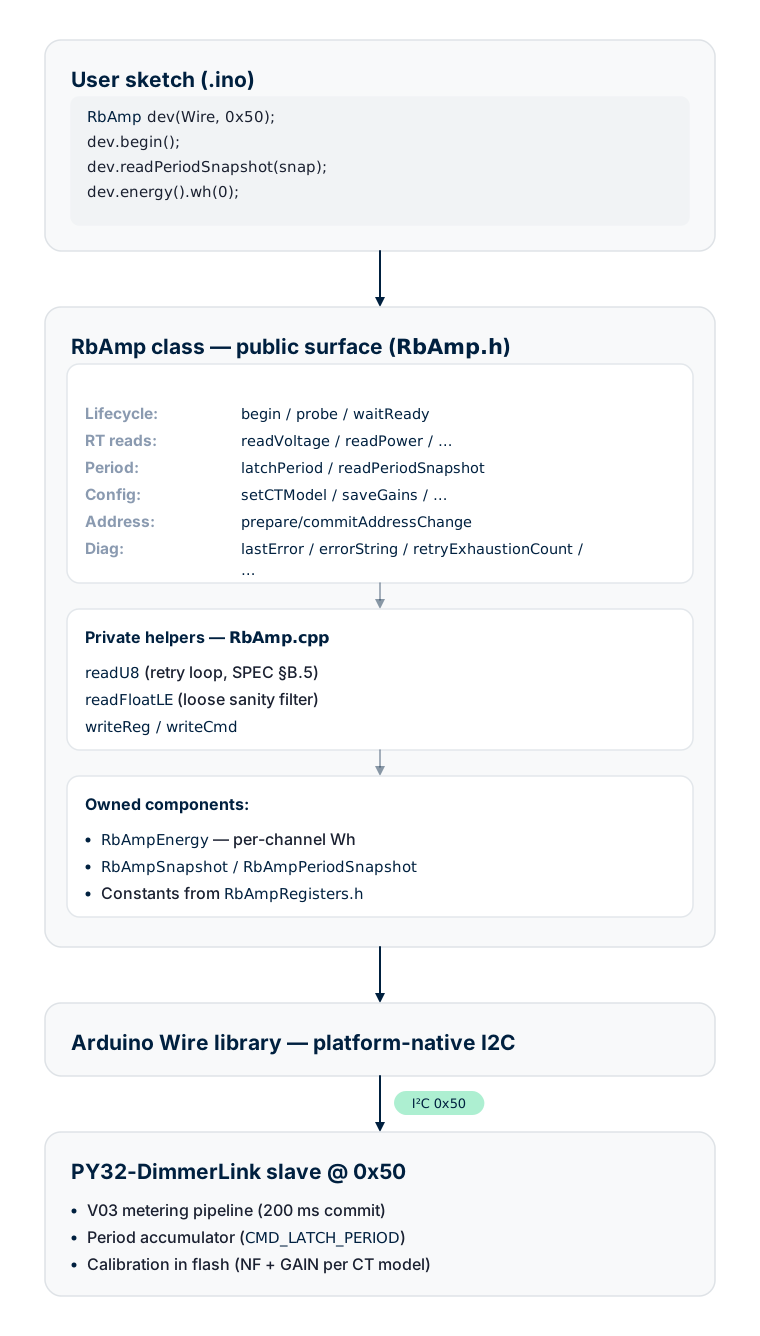
RbAmp wraps the wire-level protocol behind a high-level C++ class so user
sketches don't deal with register addresses, byte ordering, settle times,
or retry plumbing.
Without the library (raw API)
// Read U_RMS — one I2C address phase per byte (no auto-increment).
Wire.beginTransmission(0x50);
Wire.write(0x86);
Wire.endTransmission(false);
Wire.requestFrom((uint8_t)0x50, (uint8_t)1);
uint8_t b0 = Wire.read();
Wire.beginTransmission(0x50);
Wire.write(0x87);
Wire.endTransmission(false);
Wire.requestFrom((uint8_t)0x50, (uint8_t)1);
uint8_t b1 = Wire.read();
// ...repeat for b2, b3...
float u_rms;
uint8_t buf[4] = {b0, b1, b2, b3};
memcpy(&u_rms, buf, 4);
// ...and that's just one float, with no retry, no sanity check...
With the library
float u_rms = dev.readVoltage();
// 4 retries-included reads + little-endian assembly + sanity filter + error reporting,
// all in one line.
Period metering — without the library
Wire.beginTransmission(0x50);
Wire.write(0x01);    // REG_COMMAND
Wire.write(0x27);    // CMD_LATCH_PERIOD
Wire.endTransmission();
uint32_t t_latch = millis();
delay(50);           // SPEC §7 settle
Wire.beginTransmission(0x50);
Wire.write(0x07);
Wire.endTransmission(false);
Wire.requestFrom((uint8_t)0x50, (uint8_t)1);
if ((Wire.read() & 0x01) == 0) {
    // stale, retry later, must still commit t_latch otherwise next period double-counts
    return;
}
// ...read 4 bytes of avg_p, assemble float, integrate Wh manually...
Period metering — with the library
RbAmpPeriodSnapshot snap;
if (dev.readPeriodSnapshot(snap)) {
    // snap.avg_p[0] populated, dev.energy().wh(0) ticked, master_dt_ms recorded
}
The library handles every protocol invariant from the SPEC:
- Single-byte transactions (no slave-side auto-increment)
- 50 ms settle after
CMD_LATCH_PERIOD, 700 ms afterCMD_SAVE_GAINS REG_V03_PERIOD_VALIDcheck before consuming a snapshot- Master-wall-clock dt commit even on stale snapshots (prevents double-count)
- SPEC §B.5 retry+sanity discipline on ESP32 targets (3 attempts × 5 ms gap)
- Two-step address-change with a 5-second arm window
- Per-channel Wh accumulator with double-precision integration
When to use the library, when to drop to raw API
| Situation | Use library | Use raw API |
|---|---|---|
| Read U / I / P / PF | ✅ | only for bus-analyser debugging |
| Period metering + Wh | ✅ | only if you own the Wh persistence externally |
| Multi-module on one bus | ✅ | only for v2 broadcast-LATCH experiments |
| Address change | ✅ (two-step API enforced) | risky — typo bricks the module |
| Custom dimmer registers (0x10..0x18) | not exposed in library v1.0 | ✅ |
| Calibration protocol (0x20..0x25) | not exposed | ✅ — see factory calibration firmware |
| Porting to a non-Arduino runtime | n/a | ✅ — start from the wire patterns |
| Tight RAM budget (< 4 kB free heap) | rarely fits on AVR Uno | ✅ |
For everything in the first six rows, this library is what you want. The raw API recipes live in the cross-platform reference docs at raw I²C API examples.
Library architecture
Sequence diagrams
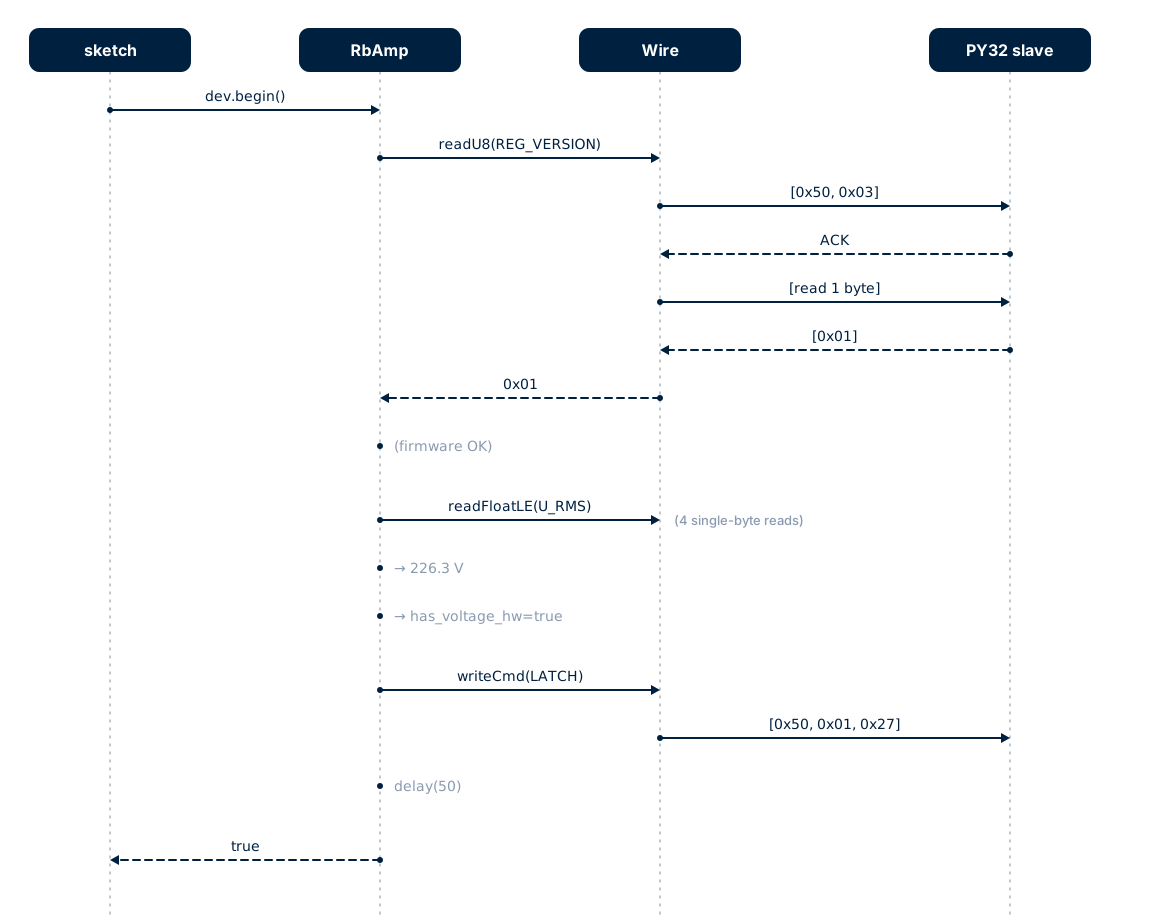
begin() flow
readPeriodSnapshot(snap) flow
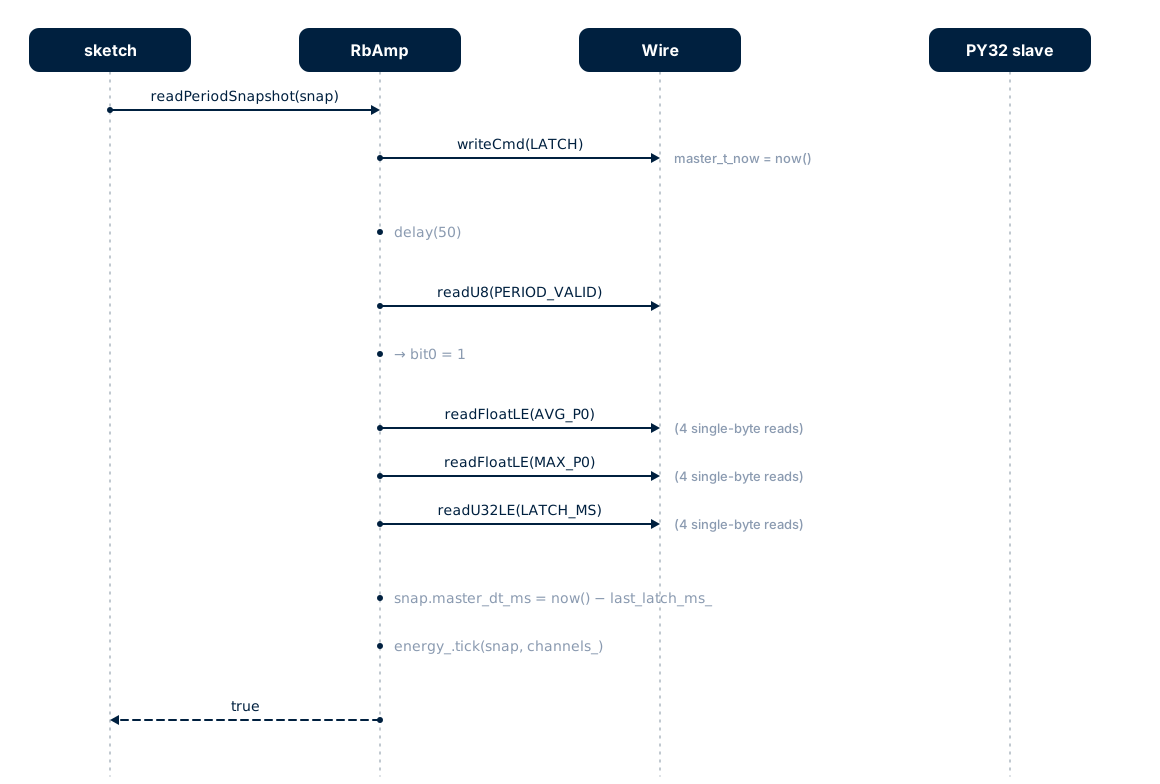
For the per-byte retry path (SPEC §B.5) — every single-byte read above internally retries up to 3 times with a 5 ms gap on ESP32 targets. Sanity filter rejects NaN / Inf / |x|>10000 on float reads.
vs raw register API
Read docs/06_examples.md for full scenario walkthroughs; the key migration table:
| Raw API | Library equivalent |
|---|---|
| Manual 4-byte read + memcpy | dev.readVoltage() / dev.readPower(ch) |
Wire.write(0x01); Wire.write(0x27); delay(50) |
dev.latchPeriod(); delay(50) (or dev.readPeriodSnapshot()) |
Wire.read(0x07) & 1 valid check |
dev.isPeriodValid() |
Manual total_wh += avg_p * dt / 3600 |
dev.energy().wh(0) — automatic |
RB_ERR_* codes from chapter 10 helpers |
dev.lastError() + RbAmp::errorString(code) |
| ESP32 NACK retry loop | Built into readU8() — see SPEC §B.5 |
| Float sanity filter | Built into readFloatLE() |
The raw helpers in the cross-platform reference (~50 lines of C) collapse
to a single #include <RbAmp.h> + constructor.
Next steps
- Quickstart — 30-second hello-world
- Examples — 10 scenario walkthroughs
- API Reference — every public method
- Troubleshooting — when things don't work
Related — main rbAmp documentation
- API Reference — formal I²C register / command / error spec the library wraps
- Arduino Examples (raw I²C) — same scenarios without the library, useful for porting
- Period Metering — atomic latch concept and master-side energy formula
- Hardware Connection — pinout, wiring, CT installation
- Troubleshooting — module-side issues (NACK, calibration drift, bus noise)
Source & issues: rb-amp/rbamp-arduino · this page in the repo: docs/01_overview.md